NEWS
1 July 2026
Queensland’s Gale force a beacon of calm
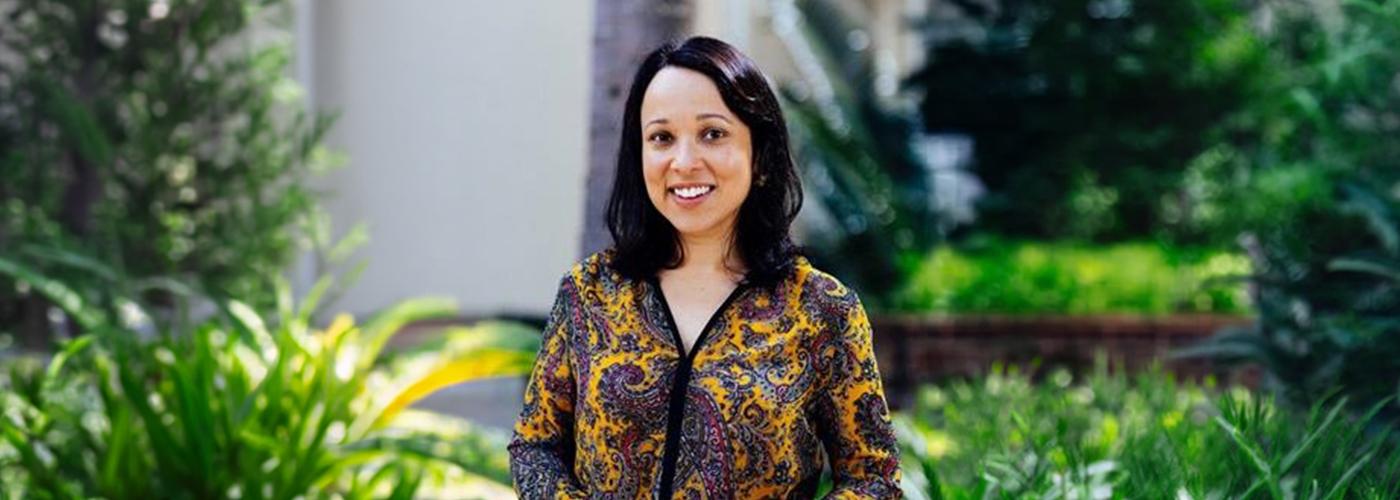
In a time when online misinformation swirls more ferociously than a Queensland summer storm, the state is fortunate to have Dr Marianne Gale as a beacon of calm.
Queensland’s new Chief Health Officer not only meets the technical requirements for the job, but brings a warm, practical sensibility honed through years of clinical practice, overseas experience and COVID-19 management.
Dr Gale was serving as New South Wales’ Deputy Chief Health Officer during the turbulent early days of the pandemic, addressing the public at daily media briefings.
“I saw my role to be a calm presence, provide the best information that we could based on what was known at the time, acknowledge the uncertainties, and give people tangible actions that they could take to protect themselves,” she said.
“It was challenging. People worked extremely hard across every part of our system.”
One of the pandemic’s legacies has been an increase in online rejection of previously routine public health measures, such as influenza vaccinations.
Dr Gale is circumspect on whether there is a direct link but acknowledges there’s no easy fix.
“Trust is built slowly, but can be very quick to break, and I think it’s something for us as a medical community, as a health community, to think very consciously about building trust.
“It’s not just a matter of vaccination or preparing for the next pandemic, whenever that will be. Increasingly people get information about all kinds of things in health from sources that are not the most reputable.
“Focusing on how we build trust and relationships with patients and communities is an absolute cornerstone.”
Dr Gale has seen up close what can happen when life-changing public health measures are not in place.
After training at Townsville Hospital in the early 2000s, she spent several years working for Medicins San Frontiers on the Thai/Myanmar border, West and Sub-Saharan Africa, South America and the Asia Pacific.
“I worked quite a bit in HIV, so with people who unfortunately didn't have access to early testing for HIV and would present at very, very late stages of HIV infection,” she reflected.
“I saw manifestations of late-stage HIV that is not commonly seen in Australia, and often the consequences of TB and HIV co-infection in people who present very late.
“Certainly for early in my career, it was a very eye-opening and huge learning experience.”
Dr Gale says COVID-19 exposed the need to build scientific literacy to understand concepts like risk.
“We’re not trying to make everybody into experts, but I think there is a level of interest from the public in engaging with more of the detail that I think is important for us to do.
“Nothing we do in medicine or life is without a risk of some kind, so it’s about explaining where there is uncertainty and what that uncertainty is.”
The Chief Health Officer role also entails bridging the gap between the personal and the political.
“I’m immensely privileged to see the perspectives and legitimate concerns of many different stakeholders in the system, including government, clinician groups, consumer groups and industry,” Dr Gale said.
“I see my role as really engaging with all of those perspectives, listening deeply, understanding the issues raised and concerns from different groups and trying to facilitate the best decisions that we can, particularly in the space of preventive health.”
On that front, Dr Gale’s prescription for a healthier life is simple: quit smoking, increase fruits and vegetables in the diet, and move more.
“The challenge with prevention is that success often looks like nothing happening,” she said.
“It’s the disease that never develops, the hospitalisation that never occurs. That can make it harder to value, but it’s some of the most important work we do.”
Dr Gale believes all clinicians should reflect on how to bring prevention into their practice and sphere of influence.
“What would a prevention-focused health system look like? Maybe that’s the kind of thing we need to think about in order to support our communities to be healthy and well and out of hospital, but also for the future sustainability of our system.
“I would love to work with AMA Queensland members around how we as a system can better embed and support our communities in preventive health.
“I think they play a critical role in that and thank them for it. I would love to work with them on how we might do that even more on things like immunisation but also reducing chronic disease.”
Ahead of AMA Queensland’s Junior Doctors Conference in July, Dr Gale advised medical graduates and junior doctors to take a spirit of exploration into their profession.
“Take every opportunity to experience different areas of practice,” she said.
“Work in different settings, including regional and rural areas, and even overseas if you can. It all helps you understand where your passions lie.”
Dr Gale enjoys bushwalking and playing piano in her sparse spare time, activities that align with her professional outlook that good health is not just about treating illness, but enabling full, meaningful lives.
“We all want to be well enough to enjoy life,” she said.
“Prevention isn’t about restriction - it’s about creating the conditions for people to thrive.”